
I really should have written this after ZaCon (november last year), but I’m lazy. However I have been asked to give a brief overview of the same talk at ITWeb this year so I figure I may as well finish this article and get it out :P
Candy:
Write-up:
So in the first blog post I discussed the basics of Magnetic stripes and how the tech works. I like it because its fundamentally simple (perhaps like myself ;).
This entry is going to cover spoofing, from building a spoofer to having something read the entries. Ideally you want to have a magreader at this stage, either one of the nifty USB ones that act as an HID device or one that you built that can read the tracks you are interested in. Below is a cheap TTL reader I got (cost about R150, thats ~$20):
- TTL Reader
- Reverse of TTL Reader
- Opened TTL Reader
- Wires Connected to Magnetic read heads
- Opposite ends connected to mono plug
This is really just so that you can “listen” to what your spoofer can generate. Magnetic stripe spoofers have been done all over the place, so please don’t think I did this, you can see some great examples HERE and HERE. Essentially however the system is dead simple, you have the ‘sound’ that you wish to play (as discussed previously), an amplifier that can crank up the volume to the level that its going to get picked up and an electromagnet (it sounds fancy, its just wire coiled around a piece of metal – more later).
27
Bypassing LF Entry Systems
Its taken a lot of motivation to start writing this, and I hope its okay, I have a mental block that I need to write this and the second post about magstripes before moving on to some new things with my plants I want to try.
Eye Candy:
My friend Roelof Temmingh (@Roeloftemmingh) made this cool video for my talk, check it out below or at http://vimeo.com/51228567. Please note we had permission to test out the door at Senseposts’ old office :)
Mission Plausible from RT on Vimeo.
:)
3
zacon wrap-up!
Hi Guys,
I see I haven’t update this blog in ages, I’d love to say I didn’t have enough time, but it was mostly just me being.. well lazy.
Zacon IV was on the 27th of October ( http://www.zacon.org.za/about.html ) and was really great, had a super time and met some great people. My talk covered a bunch of the stuff I did on the blog and essentially these sections:
* Lockpicking (briefly)
* Magstripes (reading + spoofing)
* RTLSDR (listening to guards)
* RFID (proxmark – bypassing LF EM4x door locks)
* RFCat (spoofing remotes)
It went relatively well apart from a few small demo problems (such as not being able to spoof a magnetic stripe – turned the volume down by mistake when I tried to show it! *doh*). The video of the talk can be seen here:
ZaCon4 – Andrew MacPherson – 88MPH Digital tricks to bypass Physical security from ZaCon on Vimeo.
Previously I discussed using my RTL-SDR to merely listen for analog audio signals. In this entry I’ll discuss using it to decode digital signals (this example on fixed remote signals often used for garages / gates ) so that they can be replayed/brute forced with something like the RFCat project (based on TI’s CC1111EMK module). This has probably been done to death already but I figured since I struggled with it maybe this will help someone else do it a lot quicker (and mostly cause I think its cool).
Overview
The basic components are:
* RTL-SDR on a windows machine with the HDSDR application installed (really easy to use — saves me doing hard work)
* Audio application to look at demodulated stream (I like the open-source project Audacity )
* RFcat under linux for easy transmission of data – find more about RFcat at http://code.google.com/p/rfcat/
Then there are 3 basic steps to a replay/bruteforce attack:
* Capture Signal: Figure out what frequency it is on, figure out what modulation is used
* Decode Captured Signal: Decode the signal to data you can work with so you can replay it and if possible brute force similar ones
* Transmit Signal: Send off your data for epic-winness (okay its not that complex, but it still feels cool)
Capturing Signal
I am going to assume at this stage that you have access to the remote (otherwise it may be illegal, I think.. lets just go with that). The easiest thing to do firstly is try and identify your remote, here is my garage remote for the complex that I live in (with many garages all of the same type):
This is just an update on the Arduino watering system, everything seems to be going well whilst I am away (I am away for ~a month, till the end of Blackhat / Defcon). In winter the plants don’t require nearly as much water and it seems that after 8 days the water level has dropped only 11.5cm in a reservoir ( read orange bucket ) that is about 60cm across. The orange container is smaller at the bottom, probably around 45cm so an guestimated average of say 50cm for the diameter.
At this stage I was going to do the math to work out how much water had be consumed minus that of evaporation, but I’m too lazy right now.
At this rate that container should keep the 4 plants near it (tomato, chilli, orange, peppers) as well as the palm and the 2 trays as well as the random flower going for about 6 weeks!
Having a look at the stats everything seems pretty stable with the 4 plants :)

-AM
15
RTLSDR: My First SDR!
A few weeks ago (I’ve been meaning to do this post for ages, few weeks ago is give or take 2 months) there was a post on reddit regarding a new software defined radio that cost around $20. After reading a few topics on the discussion (now all avail at http://www.reddit.com/r/RTLSDR now http://rtlsdr.reddit.com) my interest was peaked. RF was a whole new world of WTF for me. I think it offers the same awe and wonder that I had putting a tape into my very first tape into my vomit brown fischer-price tape player:
The basic gist of how it all works is as follows:
* There is a common chip found in video cards known as an RTL2832U
* This chip is commonly used for specific frequencies used for Television signals (and then software decodes this so you could watch TV on your pc)
* A bunch of cool guys ™ found a way to read the data coming into the card directly with drivers
* These cards also offered some tuners that allowed tuning beyond the basic TV ranges
So there are 2 basic sections:
* RTL2832U chips – reading data
* Tuner (E4K,other) – allows changing frequencies to various ranges
With such I started hunting around in Centurion for a Video card that had these options, after phoning a few places (read 5/6) I eventually found a TV card known as a Compro VisionMate U650F. It costs around R250 from pcpalace in centurion which offers a RTL2832U as well as the E4K tuner (the best one at this stage). *update* the cheaper visionmates (without remote) go for about R100 less than this!
This meant:
* I can tune to frequencies from around 55MHz to 1800Mhz
* For R250!
This was super, ordered my card and a few days later it arrived!
Following some _really_ easy guides for installing a few tools in windows:
* HDSDR, WRPlus, ExtIO, zadig ( http://spench.net/ has all the info but at time of writing was having some issues, try one of these: http://rtlsdr.org/ http://rtlsdr.reddit.com)
And on linux:
* GnuRadio (install guide: http://gnuradio.org/redmine/projects/gnuradio/wiki/InstallingGR)
* gr-osmodr
* rtl-sdr
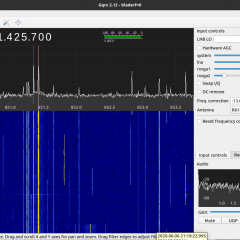
Off the bat I loaded up HDSDR (after all the config and setup – zadig for drivers, extIO copied) and immediately got that sinking feeling of ‘I know absolutely nothing’:
29
Magnetic stripes Part 1
Intro
So its been nearly a month since I last put a blog post up and I have been working on some stuff in my free time between work (been traveling to the US and took a weekend off to visit some friends in Canada). I’m not particularly in the mood to write a new post, but you know how it is, if I don’t start writing it I’ll never get round to it.
Essentially I have always been fascinated by the idea of being able to ‘hack’ with/into physical things, whether it be the Arduino and my watering system (btw you can see those stats at http://andrewmohawk.dyndns.org/AWS/), changing data on RFID cards or being that sneaky kid jackpotting ATM machines.
I started looking at magnetic stripes, mostly because they are *everywhere*, from bank cards, customer loyalty and even parking systems.
Overview
The basic gist of the system is that there are many tiny magnets or magnetic particles (usually iron oxide) which are magnetized in a specific manner within a magstripe. Essentially you take the card (or think of it as many magnets) and put it next to a magnetic reader (card reader) which then reads the fields. These fields are then taken to good ol 1′s and 0′s and used within backend systems after a bit of decoding.
The magnetic stripe on a card is actually made up of 3 different ‘stripes’ or tracks (usually - different types of cards will have a different number of tracks), right above each other. Each of these tracks can hold different amounts of data and for the basic breakdown you can read up about em at http://www.gae.ucm.es/~padilla/extrawork/tracks.html and http://www.ded.co.uk/magnetic-stripe-card-standards/
TL;DR – Track 2/3 = Numbers, Track1 = UPPERCASE,numbers
Read more »
I know, its been forever since I posted, but I do have two things i’m working on (there are drafts, but they need to be finished) – Its just the effort to actually finishing. Its on Magstripe spoofing and using the RTLSDR -shrug-.
Anyway, a discussion started in #zacon based on a post I thought was interesting about SSL-enabled mail servers and how very very seldomly its actually used for mail: http://ritter.vg/blog-no_email_security.html. The gist of the story is that mail goes from your client via MTA to another MTA to be delivered and while you might have an SSL enabled session for your gmail interface its highly unlikely that the actual mail will be going over SSL the entire trip. In fact gmail’s SSL certs are for mx.gmail.com not aspmx.l.google.com!
But back to the Alternate DNS names. So one chap in chat ‘dru’ mentioned that he has a single cert for multiple domains, I wasn’t entirely sure this was possible as I have never seen it, however after looking a bit more closely at his SSL certificates on https://mail.sybaweb.com/ it appeared that all his other linked domains (technically DNS names) were actually in the certificate. This is a great way to find out other domains/dns names linked to your target domain.
Few minutes in PHP and I whipped up a little (but ugly) script to pull this out, check it out at https://andrewmohawk.com/SSLAssociated/
9
PasteLert v2!
The Quick and dirty:
New PasteLert lives at http://andrewmohawk.com/pasteLertV2/
Downloads:
» Interface -> http://andrewmohawk.com/pasteLertV2/src/pastelertv2_Interface.zip
» Cron Tasks -> http://andrewmohawk.com/pasteLertV2/src/pastelertv2_Cron_Tasks.zip
» Scraping Script -> http://andrewmohawk.com/pasteLertV2/src/pastelertv2_Python_Scraping_Script.zip
And of course if you want everything -> http://andrewmohawk.com/pasteLertV2/src/pastelertv2_all.zip
Overview
My linode has been pretty much falling over due to the previous version of the pastebin alerts for a number of reasons:
» Scripts sometimes get blackholed (pastebin.com allows the connection but doesnt respond – due to their DDoS protection)
» Scripts sometimes were still running when the PREVIOUS script had not completed causing a chain reaction of fail
» Deletes would be happening while the above scripts where running causing MySQL to tilt
<responsible_disclosure>
Before i discuss this, let me just say that the bug has been patched (was in 2.5.1) and at the time of writing this Joomla is already 2 increments away - 2.5.3 is currently available.
</responsible_disclosure>
Overview
So back in the dark ages of my programming life I, like many people who started coding, worked in web development. And during these times I had to write modules/hack things together for various frameworks, including Joomla. At that stage i was also signed up to the Joomla security security list and a few weeks ago i saw a security update come through that affected most joomla installs and was a core issue. Most of the ‘omgjoomlasux’ commercials/vulns/notifcations actually are problems with 3rd party modules rather than with joomla itself, so this was pretty interesting. Secondly the bug was listed as a SQL injection bug and critical, this gave me the idea that with a bit of luck and some mysql commands I too could hack the planet. I fired up my green_text_on_black_background console and gave it a whirl.
First i pulled Joomla installs 2.5.1 and 2.5.2 from the download page (the issue had just been patched), next I had to go through these to figure out what changed. Doing a quick diff in linux, or for windows people use the cool winmerge it was quick and painless to find the issue:
Recent Posts
- Magnetic Stripes: Part 2 (Attacking)
- Bypassing LF Entry Systems
- zacon wrap-up!
- Hacking fixed key remotes
- Arduino Watering System: Update
What?
Tag cloud
Aiken Biphase
airodump-ng
AlchemyAPI
alerting
Arduino
Badges
botnet
c++
client side attack
cross site scripting
denial of service
facebook
facebookGraphAPI
facial recognition
google
google earth
GPS
GraphAPI
information leak
IPCam
LCD
LED
Magstripe
Maltego
mIRC
MusicBee
NER
NLP
pastebin
php
proxy
RTLSDR
Security
Serial
Servo
slowloris
Soil Moisture
Soil Sensor
SQL injection
tcp
VMWare
Water Pump
Webcam
xss
ZACon Coding (25)
General (8)
Magnetic Stripes (2)
Pastebin (6)
RFID (1)
RTLSDR (2)
Security (20)
WP Cumulus Flash tag cloud by Roy Tanck requires Flash Player 9 or better.
Donate
Archives
Created by Site5 WordPress Themes.
Experts in WordPress Hosting.